
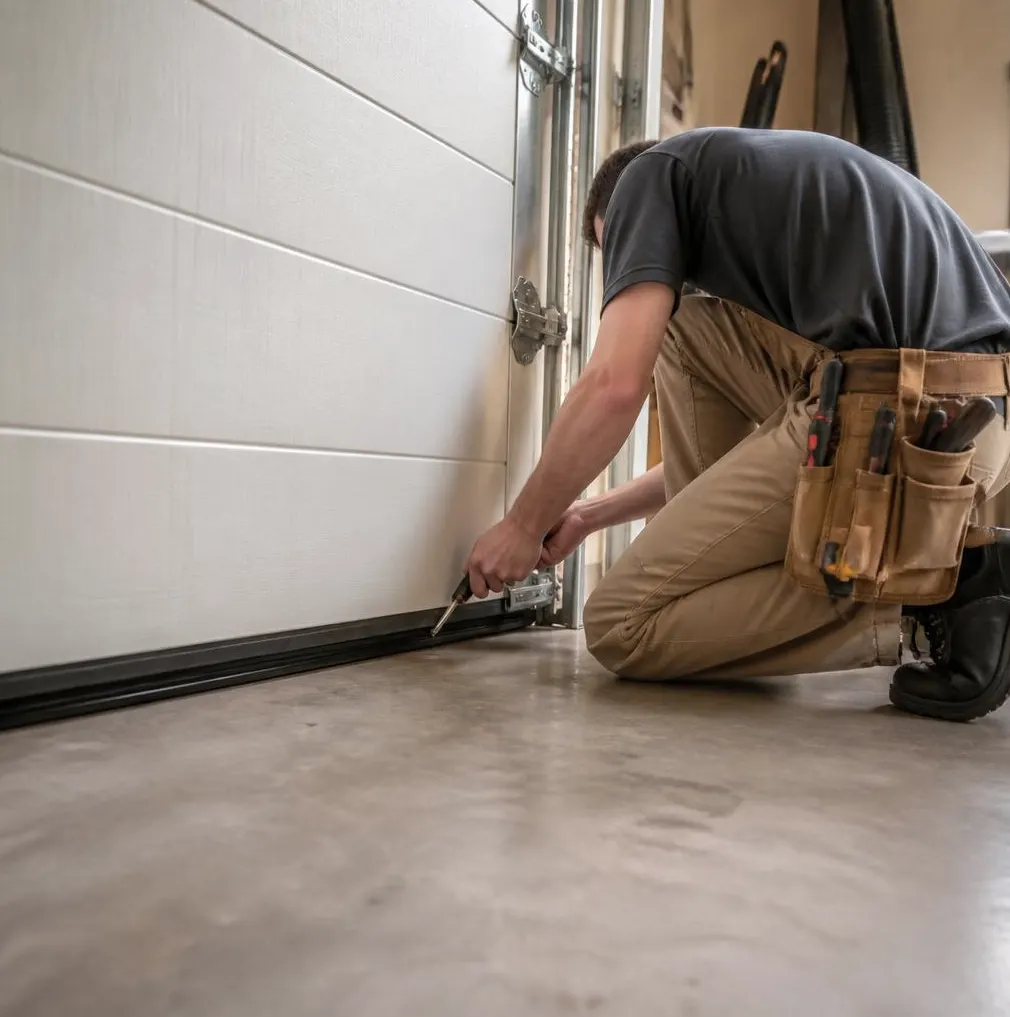
You Hit the Button and Nothing Happens
It's a Tuesday morning after the season's first real freeze. You hit the wall button or the remote, and instead of the usual smooth rise, you hear the opener motor strain, maybe a grinding or clicking sound, and the door doesn't move—or it lifts an inch and stops like something is holding it down. Sometimes it's less dramatic: the door opens, but slower than normal, jerky, or it looks like it's fighting its own tracks the whole way up.
Around Rockland County, this is a predictable side effect of the freeze-thaw cycle. Snow melts against the bottom seal during the day, then refreezes overnight, and the rubber weatherstripping bonds itself right to the concrete slab. Combine that with older housing stock—original doors, original springs, original hardware—and cold weather exposes problems that were already brewing.
What You're Likely Noticing
- The door won't move at all, and you can see a thin line of ice where the bottom seal meets the slab.
- The opener strains or grinds but the door barely lifts, then the opener reverses or stops.
- The door opens in slow motion, noticeably slower than it did in warmer months.
- It opens partway and reverses on its own, even with no obstruction.
- It feels heavier when you try to lift it manually.
Checking the Causes, in the Order a Technician Would
1. Ice Bonding the Door to the Slab
This is the first thing to rule out because it's the most common and the easiest to confirm. After a nor'easter or any day with melting snow and a hard overnight refreeze, the vinyl bottom seal can freeze directly to the concrete. The fix: never force the opener repeatedly, since that strains the motor, belt, and bottom bracket. Instead, use a plastic scraper or warm (not boiling) water along the seal line to break the bond, then dry the area. If this happens often, a technician can trim or replace a worn bottom seal so it seats more tightly and sheds water instead of pooling against the slab.
2. Stiff or Dirty Rollers, Hinges, and Tracks
If there's no ice bonding at the bottom, the next check is the rolling hardware. Standard grease and old lubricant thicken in cold temperatures, and any grit or road salt residue tracked in from the driveway makes rollers bind rather than roll. This shows up as sluggish, jerky movement rather than a dead stop. The fix is a proper cleaning of the tracks and rollers followed by a silicone-based, cold-weather garage door lubricant on the hinges, rollers, and track rollers—not WD-40, which doesn't hold up and attracts dirt.
3. Springs Losing Tension in the Cold
Metal contracts as temperatures drop, and torsion or extension springs are no exception. A spring that was already near the end of its service life can lose just enough tension in freezing weather that the opener has to work much harder to lift the door—this is often what produces that straining or grinding sound. This isn't a DIY adjustment; springs are under heavy tension and a technician will check the door's balance by disconnecting the opener and lifting manually. If the door feels noticeably heavy or won't stay halfway up on its own, spring replacement is usually the real fix, not a lubrication job.
4. Ice or Debris Inside the Tracks
Even a small amount of ice inside the vertical or horizontal tracks can throw the rollers off alignment, causing the door to reverse partway up as the opener's sensors read resistance. A technician will run a hand along the inside of the tracks (carefully) checking for buildup, then clear it and check that the tracks are still plumb and properly spaced—cold contraction can occasionally shift mounting brackets on older installations.
5. Opener Settings Thrown Off by the Cold
If everything mechanical checks out, the last stop is the opener itself. Cold weather can affect the force and limit settings, especially on older opener units, causing the safety reversal feature to trigger too easily. This is a straightforward recalibration, though on units older than 10–15 years it may point toward a larger opener repair or replacement.
When to Call Nanuet Garage Door
If you've cleared visible ice and the door is still straining, reversing, or won't budge, stop operating it and call us. For a one-time seasonal issue, our Garage Door Maintenance service covers lubrication, track inspection, and a balance check before small problems turn into a stuck door on a 10-degree morning. If the door won't move at all and you need it working the same day, our Emergency Garage Door Service covers exactly that kind of call, including on-the-spot spring replacement when that's the culprit.
If your garage door in Nanuet, NY is sticking, straining, or frozen shut this winter, call Nanuet Garage Door for prompt, honest service from a local garage door company that knows what Rockland County winters do to these doors.